Cashel Forest
History of Cashel
The oakwoods of Loch Lomond have a long history and represent some of the largest remnants of semi-natural woodlands in the country. In the 18th century, the woods were systematically managed and converted to oak ‘coppice-with-standards’ with the smaller timber managed for bark for leather tanning and charcoal, and the larger timber for more general domestic and estate use.
There is about 24 hectares of such remnant oakwood at Cashel. In the latter half of the 19th century this industry collapsed and at Cashel sheep farming became the predominant land use and remained so until the 1253 hectares of Cashel Farm was purchased by the Royal Scottish Forestry Society in 1996 with a grant from the Millennium Forest for Scotland Trust.
The Society set up the separate Cashel Forest Trust to help deliver the native woodland restoration project. Between 1997 and 2005 some 300ha of new native woodland was established and which remains the core of the Cashel forest to this day.
In 2026, with the woodland fully established, Cashel Forest Trust sold the farm-house and visitor centre whilst retaining the woodland and surrounding land.
Forest Management
The primary aim of the Cashel Forest Trust is to demonstrate the restoration and regeneration of Scotland’s Native Woods through sound forestry practice, delivering sustainable social, environmental, and economic public benefits. To that end, we intend that not only that Cashel should be a place for people and wildlife to enjoy but also a working forest generating sufficient income to sustain our activities in perpetuity. We carry out thinning operations in the wood to help enhance both the amenity of the woods but also the current and future timber value.
Having established the core forest area, any future expansion of the forest should be predominantly by natural regeneration, but with some additional planting where this is appropriate. We have undertaken a couple of ‘bioblitz’ days to better understand the nature of Cashel and have a number of conservation projects in place. Cashel is home to otters, badgers, red squirrels, water voles, pine marten, black grouse, woodpeckers, adders, glow worms, and many other species of wildlife.
You can learn more about the ecology of Cashel via the Cashel Forest Ecology Group page.
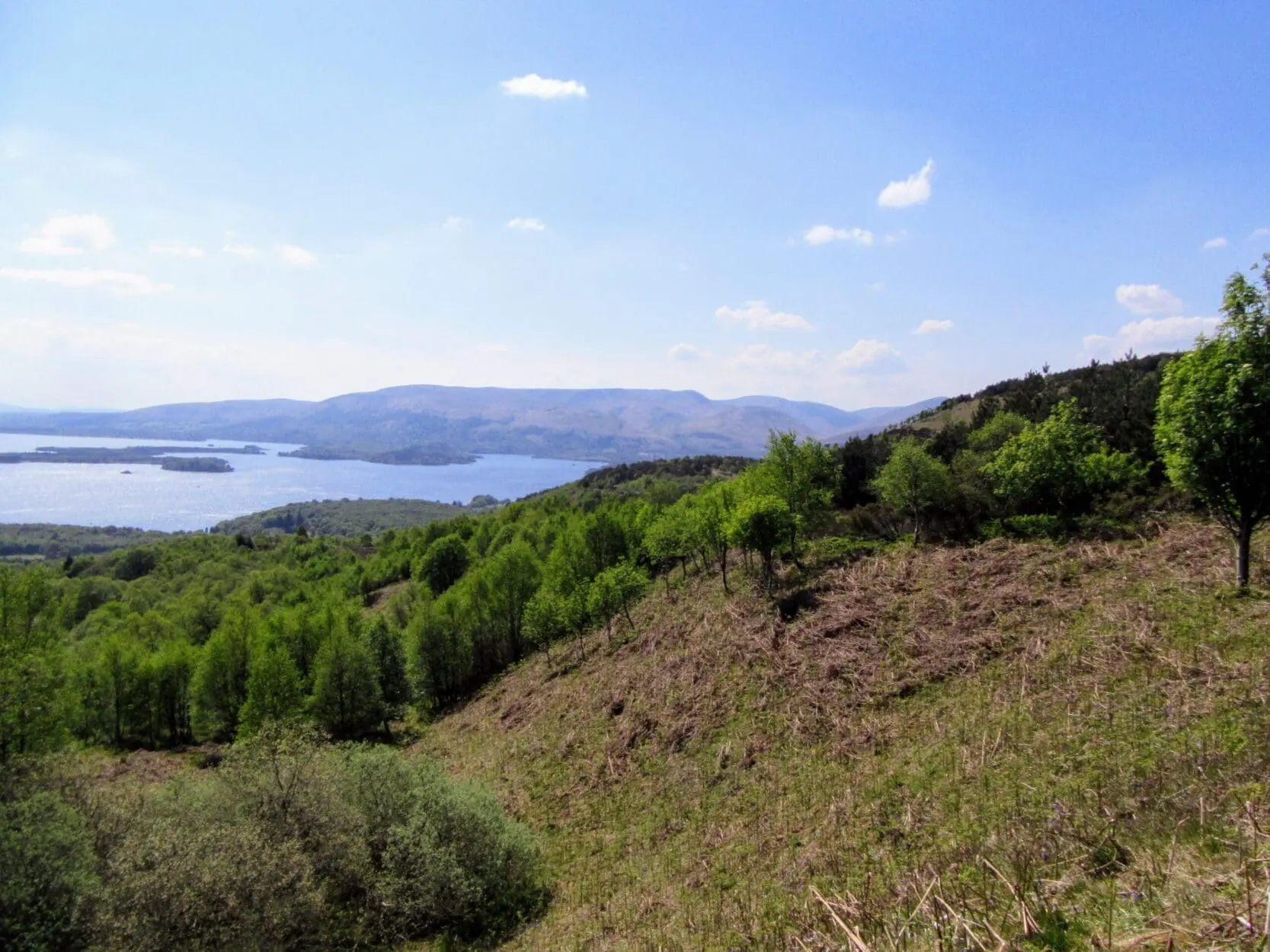
Visit cashel Forest
Cashel forest is accessible all year round during daylight hours. It is only a few hundred yards from the West Highland Way – Scotland’s best loved long distance walking route – and offers a comfortable respite and break point along the way.
Our car park holds up to 40 cars. Parking is charged at £3 per day which can be paid using cash, card and contactless methods.
The fee for parking is an important source of income for our charity. Without this vital income we would not be able to offer parking facilities or to maintain the path network and woodlands. .
- Postcode: G63 0AW Lat,Long: 56.120792; -4.5916256
- Ordnance Survey: E:00238985; N:00695032 Grid reference: NS 400 940
- What three words: ///uplifting.steps.spells
We’re a 10 minute drive north of Balmaha on East Loch Lomond. The turning for Cashel is on the right hand side of the road as you travel north.
Look out for the Brown tourist signs; there is one about half a mile from our entrance and one opposite our entrance.
If you’d rather walk, the West Highland Way runs right past our front gate. It takes 2-2.5 hours to walk via the West Highland Way from Balmaha or about 1 hour from Milarrochy bay. The West Highland Way is marked by white thistle posts at regular intervals.
There is no public transport service to Cashel Forest at present.
The closest bus stop is at Balmaha. This is served by the 309 Balmaha – Alexandria service, operated by Garelochhead Minibuses & Coaches. The 309 stops in Drymen and at Balloch Bus station.
Full details and further information about travel by public transport in Scotland can be found here.
There are a number of marked trails in Cashel Forest. Visit the website for more information https://www.cashel.org.uk.